Apps
They teach moves, not thinking. The child pushes pieces while the screen says well done. Turn the screen off and nothing is left.
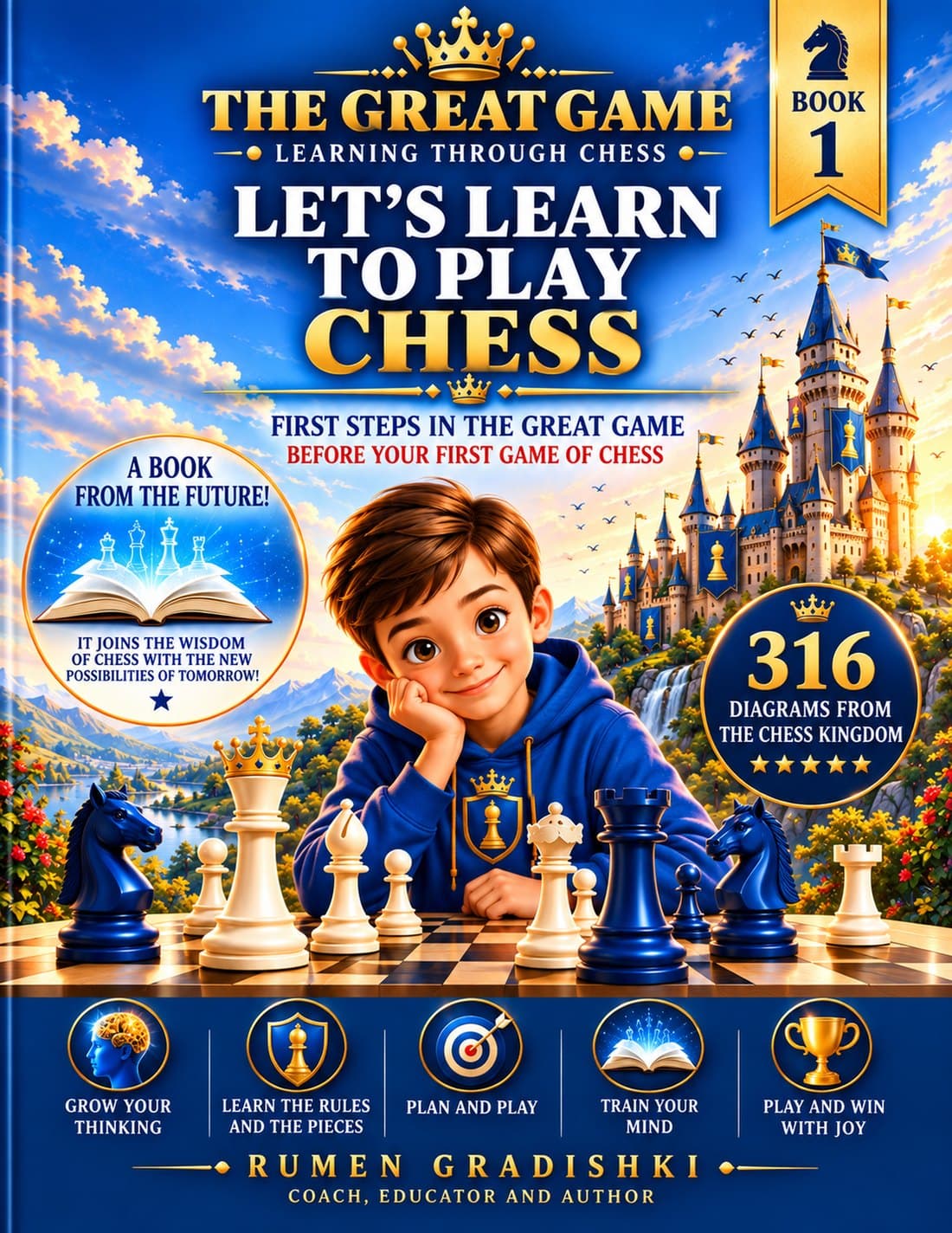
A chess series for children aged 4 to 14
Every topic carries a box written for the parent: what to say, what not to say, and how to end the session so the child asks again tomorrow. You do not need to know chess. You need fifteen minutes.
Why the board ends up in the cupboard
They teach moves, not thinking. The child pushes pieces while the screen says well done. Turn the screen off and nothing is left.
Watching is not playing. Chess is learned with a hand on a piece and with a mistake that belongs to the child.
A strong player is not automatically a good teacher of a six year old. Knowing the game and knowing how a small child learns it are two different crafts.
The method
Three rules hold the whole series together.
Each rule is shown on a single arranged position, not on ten. A child remembers a picture far longer than a sentence.
Say it, show it, let the child try. The loop is short because a six year old's attention is short. We work with that instead of fighting it.
Ask the question, count silently to five, and only then answer. In those five seconds the child starts thinking alone. That is the entire point.
The series
Planned as 5 books that carry a child from the first square to a real game. They are written one at a time, in the order they are taught.
For children aged four to eight, and their parents
Twenty-five lessons, methodically ordered, that take a child from an empty board to a whole game played alone. Every topic carries a box written for the parent, so you can sit down and help without knowing how the pieces move.
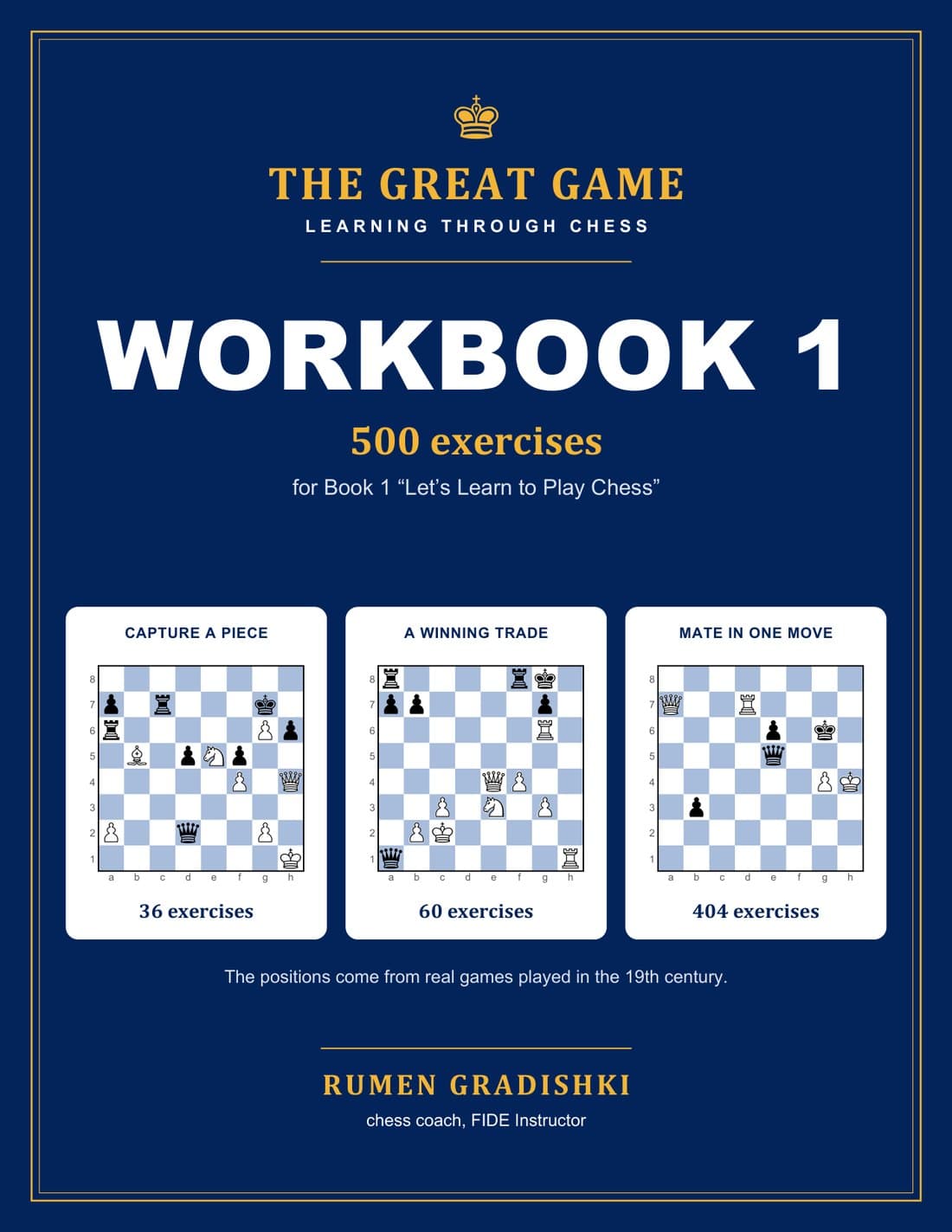
500 exercises for Book 1, “Let’s Learn to Play Chess”
Five hundred exercises in the order of the lessons in Book 1: capture a piece, a winning trade, mate in one move. One page a day, about fifteen minutes. The positions come from real games played in the 19th century, and the solutions to all 500 are inside.
The next book is added here the moment it exists. Nothing is listed before it is written.
Who wrote it
Rumen Gradishki has taught chess in Bulgarian classrooms since 2007. About 75 children a year, every year, the same hands and the same board.
What the children do
No promise that your child will become a champion. This is simply what happens when a child follows the order and stays with it.
2024
Three national titles in ten days, girls under 8
The last one at classical time control, with 8 points from 9 games.
2019
Free chess lessons for visiting children in Sofia
At West Mall (Mega Mall), Lyulin. Children from the school teach visiting children to play chess, free of charge. A child who can teach has understood.
Free, no sign up
A real chess board in the browser. Your child plays the computer on four levels, from Pawn to Queen, with every rule working: castling, en passant, promotion, check, mate and stalemate.